
More Dunwoody homeowners ask us about composite decking every year than they did five years ago, and the reason usually comes down to one thing: they already own a wood deck and are tired of resealing it every summer. Composite decking, including premium lines like Trex, gives you the look of real wood boards without the yearly upkeep, which matters in a climate that's as hard on exposed wood finishes as metro Atlanta's is. We install composite and Trex decks throughout Dunwoody and the surrounding DeKalb County communities, on new builds and as replacement decking over existing wood framing.
The material has come a long way from the early composite boards that used to fade unevenly and grow mildew streaks within a couple of seasons. Today's capped composite is a different product, and for a lot of households near Perimeter Center who want a deck they can enjoy on a Saturday instead of maintaining on one, it's become the default recommendation rather than the upgrade option.
Capped Composite vs. Budget Composite: What the Difference Actually Buys You
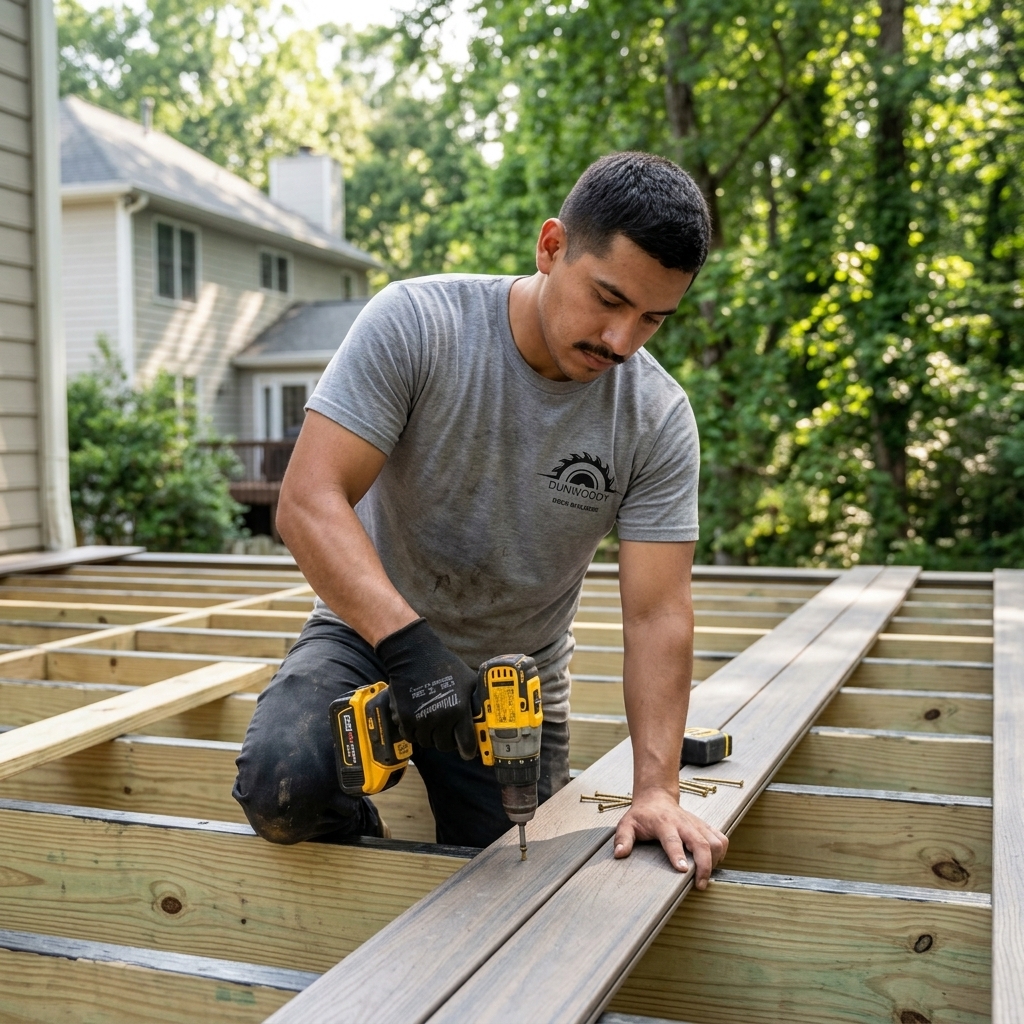
Not all composite decking performs the same way in this climate, and the gap matters more here than in a drier region. Fully capped composite, which includes Trex's mid and premium lines, wraps each board in a polymer shell that resists staining, scratching, and UV fading. Uncapped or partially capped budget composite costs meaningfully less per square foot but tends to show wear, surface staining, and color fade faster once it's exposed to a few years of Georgia humidity and intense summer sun.
We stock samples from several manufacturers and tiers so you can see and feel the difference before deciding, rather than picking based on a brochure photo. For decks that sit in full sun most of the day, which describes a lot of west-facing backyards around Dunwoody, we usually steer clients toward capped boards even if it means trimming the budget somewhere else, since that's where budget composite tends to disappoint fastest.
Why Composite Handles DeKalb County's Climate Differently Than Wood
Georgia humidity, spring pollen, and the shaded canopy common in older Dunwoody neighborhoods near Brook Run Park all work against exposed wood grain, but composite's polymer surface simply doesn't absorb moisture the way wood fibers do. That means no swelling, no splintering, and far less mold or mildew growth on the board surface itself, even under heavy tree cover that keeps a deck damp for days after a summer thunderstorm rolls through.
The substructure underneath still faces the same DeKalb County conditions a wood deck's framing does — red clay soil that shifts with moisture, humidity that works into any exposed joint, and the occasional winter ice event. We still frame with pressure-treated lumber rated for ground contact, pour footings to the correct depth for your soil, and flash every ledger connection, because a composite deck's surface durability doesn't mean anything if the frame underneath it was cut corners.
Get a Free Composite Decking Quote
Free, no-obligation on-site estimates anywhere in Dunwoody and DeKalb County.
📞 Call 470-327-9145Permits, Cost, and Timeline for a Composite Deck
Permit requirements don't change based on decking material — a composite deck attached to your home or elevated above grade needs the same permit from the City of Dunwoody or DeKalb County that a wood deck would, along with engineered drawings sized to your specific design. We prepare and file everything and schedule every inspection, so switching to composite doesn't add any extra paperwork on your end.
Composite and Trex decks in the Dunwoody area typically run from about $11,000 to $26,000, depending on square footage, decking tier, railing style, and how much substructure work is involved. That's a wider range than pressure-treated wood mostly because composite tiers themselves vary so much in price. Once permitted, a single-level composite deck usually takes 1 to 2 weeks to build, and being close to I-285 and GA-400 means our suppliers can typically get a specific color or profile to us within a day or two if it's not already in stock.
Maintenance and Long-Term Value Compared to Wood
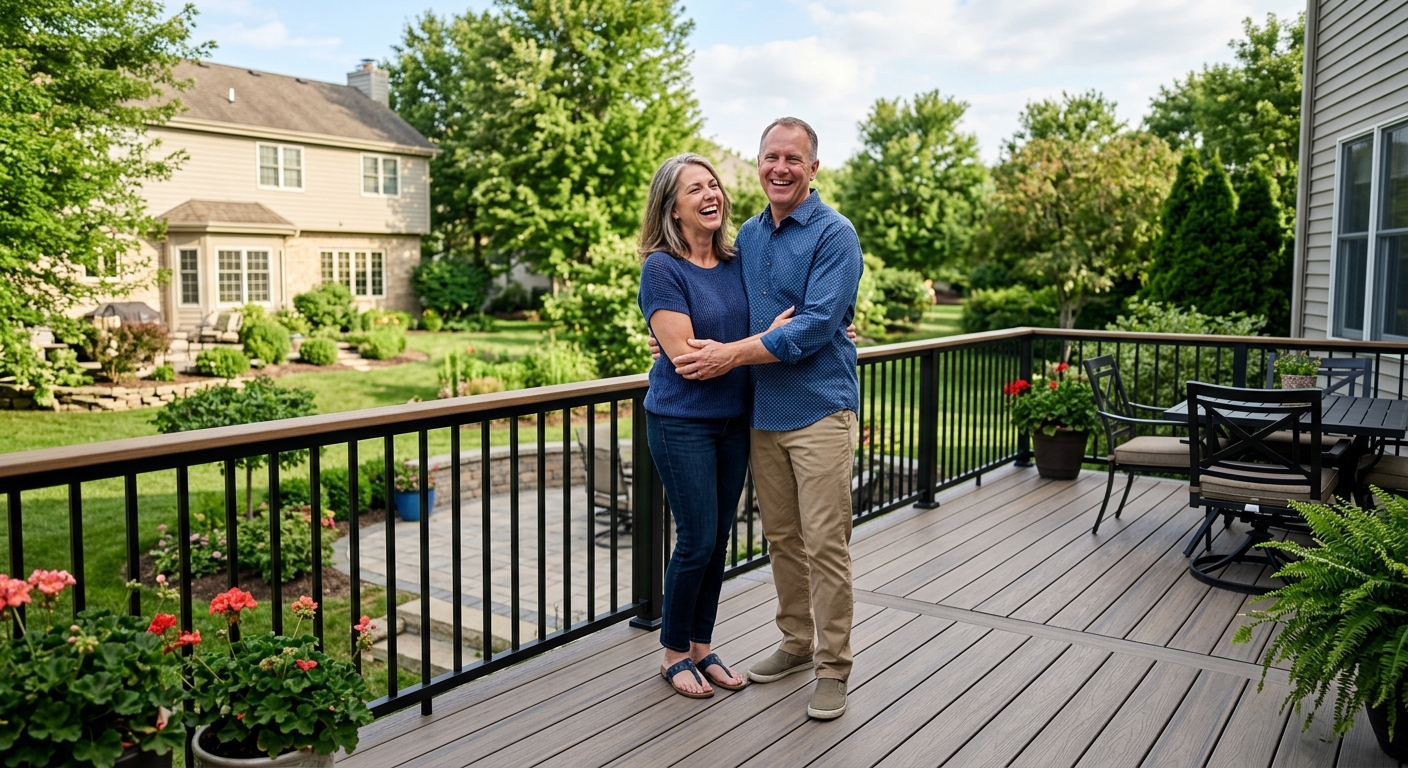
Composite decking still needs a seasonal wash, usually just soap, water, and a stiff brush to clear pollen film, tree tannin stains, and any mildew spotting before it sets into the surface texture. What it doesn't need is sanding, staining, or sealing, and that's the whole trade — you pay more per square foot going in, and you spend far less time and money maintaining it over the 25-plus year life most capped composite carries under warranty.
For a household along Ashford-Dunwoody Rd or anywhere else in the area weighing the two options, the honest answer is that neither material is wrong. Wood costs less upfront and can be resealed indefinitely if you're willing to keep up with it; composite costs more at installation and essentially removes that yearly task. If you want the full comparison on lumber species and pricing, our custom wood decks page breaks that side down in detail.
Color and Board Profile Choices That Actually Matter Here
Manufacturers offer dozens of color and grain-pattern options, but not every one performs the same way once it's baked in Georgia sun for a full summer. Darker chocolate and charcoal tones look sharp in a showroom sample but run noticeably hotter underfoot on an unshaded deck facing GA-400 or any other open exposure, sometimes uncomfortably so by early afternoon in July. Lighter driftwood and weathered-gray tones stay cooler and, as a side benefit, show pollen dust less than a dark board does during the weeks each spring when everything outside gets coated in yellow film.
Board profile matters too. Grooved-edge boards paired with a hidden fastener system give the cleanest finished look with no visible screw heads, but they cost slightly more in labor to install correctly and require consistent joist spacing to avoid a wavy surface over time. Square-edge, face-screwed composite is a bit more forgiving to install and typically a little cheaper, which makes it a reasonable choice on a secondary structure like a small side deck or a landing, even if the primary living deck gets the upgraded hidden-fastener treatment.
Composite & Trex Decks FAQs — Dunwoody, GA
Composite decks in the Dunwoody area typically run from about $11,000 to $26,000 depending on square footage, decking tier, railing choice, and substructure. Premium capped boards like higher Trex lines sit at the top of that range. We give every client a written, itemized estimate at no cost.
For most Dunwoody homeowners, yes, if you're planning to stay in the home more than a few years. You pay more upfront than for pressure-treated wood, but you skip the sanding, staining, and yearly sealing wood needs in this humid climate, which adds up in both time and money over a decade or more.
Newer capped composite boards, especially lighter colors, run noticeably cooler underfoot than older uncapped composite or dark-stained wood. We can point you toward specific color lines that perform best in direct, unshaded Georgia sun if your deck faces south or west.
Yes. Permit requirements are based on the structure, not the decking material, so a composite deck attached to your house or elevated above grade needs the same City of Dunwoody or DeKalb County permit and engineered drawings a wood deck would. We handle the drawings, filing, and inspections.
The substructure — footings, posts, and joists — is nearly identical to a wood deck and is typically still pressure-treated lumber or in some cases coated steel framing. The difference is on the surface: composite boards use hidden fastener clips instead of face screws, and they need slightly wider joist spacing than some wood installations to prevent long-term sagging.
Most quality capped composite decking, including Trex, carries a 25 to 50 year manufacturer warranty against fading, staining, and structural issues, and holds up to that in real-world Dunwoody installations when it's installed with proper drainage and spacing. The framing underneath still needs the same attention a wood deck's framing would.
Trex and other premium capped brands use a fully wrapped polymer shell that resists staining, scratching, and fading better than uncapped or partially capped budget composite. Budget composite costs less upfront but tends to show wear, mold streaking, and color fade sooner in Georgia's humidity and UV.
Less than wood, but not zero. A seasonal wash with soap and water clears pollen, mildew spotting, and leaf tannin stains before they set in. There's no sanding, staining, or sealing required, which is the main reason homeowners near the Perimeter switch to composite after owning a wood deck.
Yes, quality capped composite resists mold and mildew far better than wood since the polymer shell doesn't absorb moisture the way wood fibers do. Shaded decks under a heavy tree canopy still need that occasional wash, since surface pollen and organic debris can support mildew growth on any material if left alone too long.
Most single-level composite decks take about 1 to 2 weeks to build once the permit is approved and materials are on site, similar to a wood deck timeline. Hidden-fastener composite installation actually goes slightly faster per square foot than face-screwing wood decking once the crew is set up.
Yes, and composite is a popular pick for pool surrounds specifically because it won't splinter or rot from constant splash exposure the way wood can. We select slip-resistant, heat-conscious color lines for pool decking and design the layout around your equipment pad and code-required barriers.
Yes, every estimate is free with no obligation anywhere in Dunwoody and the rest of DeKalb County. We measure your yard in person and walk you through decking tiers and pricing before you commit to anything.