
An open deck in Dunwoody is usable maybe half the year without some kind of cover. From late May through September, a west-facing deck near Ashford-Dunwoody Road can hit surface temperatures that keep everyone inside by two in the afternoon, and an afternoon thunderstorm can end an outdoor dinner in about ninety seconds flat. A pergola or covered deck solves both problems at once — it cuts the direct sun enough to make the space usable at 4pm in July, and depending on the style, it can keep you dry when the sky opens up. We design and build both, and the right choice for your backyard usually comes down to how you actually plan to use the space and how much rain protection matters to you.
Pergola or Fully Covered Deck: Picking the Right Structure
A traditional open-slat pergola is the lighter, more affordable option. It's built from cedar or pressure-treated timber with evenly spaced crossbeams that filter sunlight and cast moving shade throughout the day. It won't keep you dry in a downpour, but it takes the edge off direct sun and gives a backyard visual structure without closing it in. A fully covered deck goes further — a solid, shingled roof tied into your home's existing roofline, turning the space into something closer to a screened porch without the screens. It costs more and takes longer to build, but it functions as usable outdoor space in almost any weather short of a sideways storm.
In between those two, motorized louvered pergolas have become a popular middle ground for homeowners in the Perimeter Center area who want flexibility. The aluminum louvers rotate open for full sun, angle for filtered shade, or seal completely shut to shed rain like a solid roof. It's a bigger investment than a fixed wood pergola, but it replaces the need to choose between two separate structures.
Building for Georgia Weather, Not Just Georgia Sun
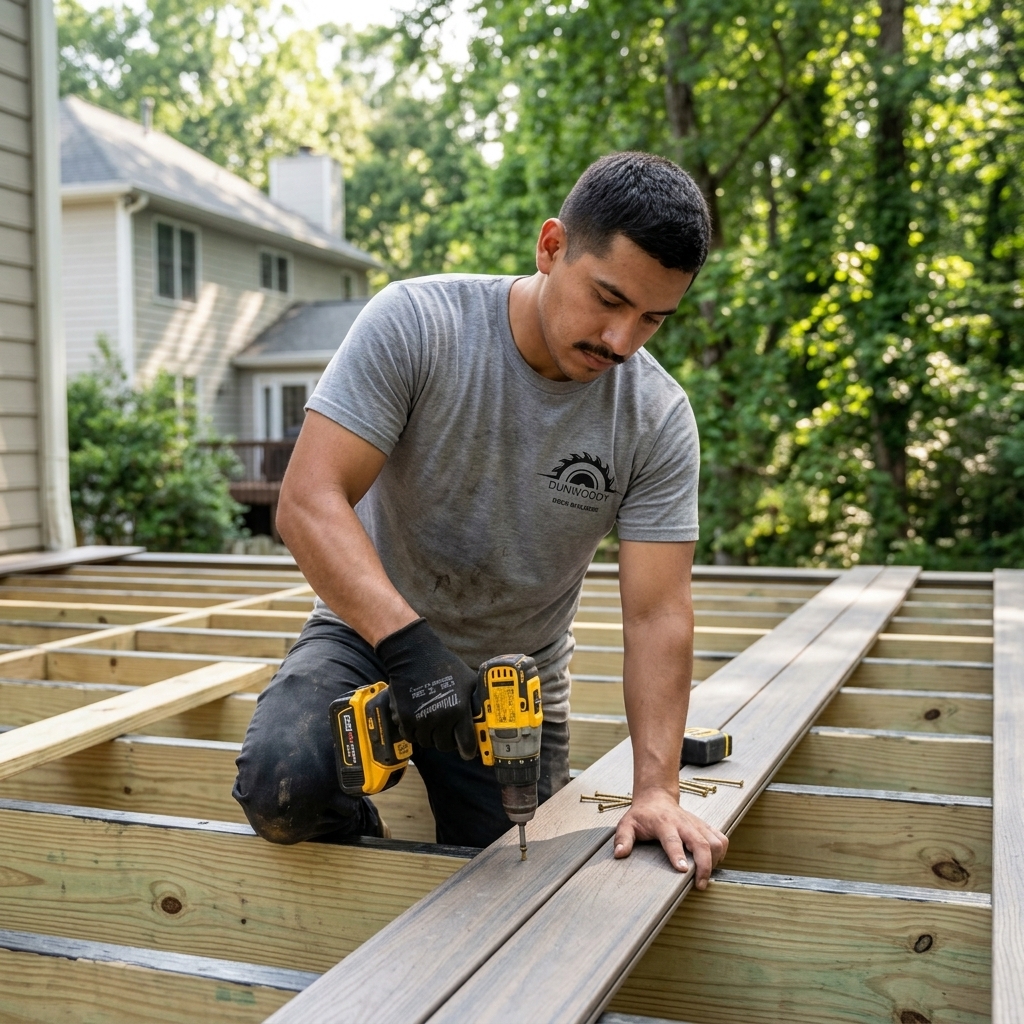
Shade is only half the engineering problem. A structure that has to survive a Dunwoody summer needs to handle sustained humidity, sudden downpours, and the wind gusts that come with a strong thunderstorm rolling off I-285 in July. We frame with corrosion-resistant hardware throughout and use lumber rated to resist the moisture that DeKalb County's dense red clay soil holds onto around footings long after a storm has passed. On covered decks specifically, roof valleys and gutters are sized to move water fast, since a design that looks fine on paper can back up and pool if it isn't sloped correctly for how hard this region can rain in a single afternoon.
Winters here are mild, but Dunwoody does see the occasional ice storm, and any roofed structure needs framing sized to carry that additional dead load without flexing. We size rafters and posts with that in mind rather than building to the bare minimum a warmer-climate spec might allow.
Permits for Attached and Freestanding Structures
The City of Dunwoody treats roofed and attached outdoor structures as building projects requiring a permit, and covered decks that connect to your home's existing roof framing generally need engineered drawings and a structural plan review before a permit is issued. Freestanding pergolas that sit apart from the house sometimes qualify for a more straightforward review, but the size and height still matter, and we confirm the specific requirements with the city before any framing starts. We prepare the drawings, submit the permit application, and schedule every required inspection, so you're not the one making trips to a permit counter.
Get a Free Pergola or Covered Deck Quote
Free, no-obligation on-site estimates anywhere in Dunwoody and DeKalb County.
📞 Call 470-327-9145What It Costs and How Long It Takes
A cedar or pressure-treated pergola generally runs $7,500 to $16,000 depending on size, whether it's attached or freestanding, and any add-ons like string lighting or a ceiling fan mount. A fully covered deck with a shingled roof, gutters, and electrical typically falls between $18,000 and $38,000, since it's a more involved structural build. Louvered aluminum systems land in between, usually $15,000 to $30,000 installed. Construction itself moves fairly quickly — a pergola in 3 to 5 days, a covered deck in 2 to 4 weeks — but permit review with the City of Dunwoody can add another 2 to 4 weeks before a crew ever shows up, which we factor into the schedule from the first conversation.
Maintenance and Long-Term Upkeep
A cedar pergola needs cleaning and resealing roughly every 12 to 18 months to hold its color against Georgia's UV and humidity, similar to any exposed cedar railing or stair. Aluminum and composite structures need very little beyond an occasional rinse. Covered decks introduce one more maintenance item regardless of material — gutters and roof valleys need to be checked each fall, since pine needles and heavy spring pollen are a fact of life on wooded lots near Brook Run Park and throughout Dunwoody's older, tree-covered neighborhoods, and a clogged valley is the most common cause of a slow leak we get called out to fix.
How This Compares to a Screened Porch or Open Deck
If bugs are the main complaint rather than sun or rain, a screened porch solves that specific problem better than either a pergola or an open covered deck, since it fully encloses the space. If your priority is keeping the existing open, airy feel of a deck while adding some relief from direct sun, a pergola is the lighter, less expensive path. A fully covered deck sits at the top end of both cost and functionality — it's the closest thing to adding a room to your house without fully enclosing it, and for homeowners near Mount Vernon Road and Dunwoody Village who entertain often, it tends to be the option that gets used the most months out of the year.
Pergolas & Covered Decks FAQs — Dunwoody, GA
A standard cedar or pressure-treated pergola typically runs $7,500 to $16,000 depending on size and whether it's attached to the house or freestanding. A fully covered deck with a shingled roof tying into your existing roofline usually lands between $18,000 and $38,000, since it involves structural framing, flashing, gutters, and often electrical for fans or lighting. Louvered aluminum pergolas with motorized slats sit in between, generally $15,000 to $30,000. Every estimate is itemized and free.
A pergola has an open or louvered top that filters sunlight but doesn't fully block rain unless it's a motorized louvered system. A covered deck has a solid roof, usually shingled to match your house, that keeps the space fully dry and usable during a downpour. Pergolas are lighter structures and generally cheaper; covered decks function more like an outdoor room.
Yes in almost every case. The City of Dunwoody requires a building permit for any roofed or attached structure, and covered decks that tie into your home's roofline typically need engineered drawings and a structural review. Freestanding open pergolas under a certain size sometimes qualify for a simpler permit path, but we always confirm with the city before framing anything. We handle the drawings, filing, and inspections.
Both are common. An attached pergola ties into the house with a ledger board, similar to a deck, and needs the same flashing and waterproofing attention to protect your siding. A freestanding pergola stands on its own footings a few feet off the house, which is often the simpler permit path and gives you more flexibility on where to place it in the yard.
A louvered pergola has motorized aluminum slats that rotate open for full sun, close for shade, or seal shut to shed rain like a roof. For a lot of Dunwoody homeowners who want one structure to handle both a sunny spring afternoon and a sudden summer thunderstorm, it's worth the upgrade over a fixed-slat wood pergola. It costs more upfront but eliminates the need to build two separate structures for sun and rain.
The critical point is where the new roof meets your existing roofline. We tie the framing into your rafters or add an engineered ledger, then install step flashing and counter-flashing integrated with your existing shingles rather than just caulking the seam. We also match the roof pitch to shed water away from the house instead of pooling at the intersection, which is where most covered-deck leaks actually start.
A fixed open-slat wood pergola casts moving shade lines that shift with the sun through the day — it takes the edge off but won't fully shade a space at high noon. Adding a retractable canopy, close slat spacing, or upgrading to a louvered system gives you real, adjustable shade. We'll talk through how you actually plan to use the space before recommending which route makes sense.
A freestanding wood pergola usually takes 3 to 5 days once permits clear. A covered deck that ties into your roofline and includes electrical typically takes 2 to 4 weeks depending on size and roofing complexity. Permit review with the City of Dunwoody can add 2 to 4 weeks before construction starts, so we build that into your overall timeline from the first estimate.
Often, yes. If your existing deck's framing and footings are sound and sized to carry the additional roof load, we can build the cover on top of what you have rather than starting from scratch. We always inspect the existing structure first, since older decks in Dunwoody's established neighborhoods weren't always built to carry a roof, and we won't put a cover on a frame that can't support it safely.
Most homeowners match their existing architectural shingles so the addition looks original to the house. We also install standing-seam metal roofing for a more modern look or for lower long-term maintenance, and polycarbonate panel roofs for a budget option that still sheds rain while letting some light through. We'll show you samples against your actual siding and shingles before you decide.
A cedar pergola needs cleaning and resealing roughly every 12 to 18 months in this climate to hold its color against Georgia's UV and humidity. A composite or aluminum pergola needs little beyond an occasional rinse. Any covered structure also needs its gutters and roof valleys checked each fall, since pine needles and pollen buildup are common in wooded Dunwoody lots and can clog drainage if ignored.
Generally yes. Outdoor living space is a strong selling point in the Dunwoody and Perimeter market, and a covered structure specifically extends the number of months and hours a buyer can picture using the space, since it isn't limited by direct sun or light rain. It's a project appraisers and agents in this area consistently recognize as adding usable square footage.