
A lot of Dunwoody backyards weren't built flat. Between the rolling terrain around Mount Vernon Road and the sloped lots common in neighborhoods off GA-400, a single flat deck platform often isn't the most practical or attractive answer to the space you actually have. Multi-level decks step down a slope in stages instead of fighting it, and pool decks come with their own set of rules entirely — surface material, drainage, and barrier code all have to work together around a body of water your kids and neighbors' kids are going to be running past barefoot. We build both, and the engineering behind them is different enough from a standard single-level deck that it's worth understanding before you start pricing the project.
Why Sloped Lots Call for a Tiered Design
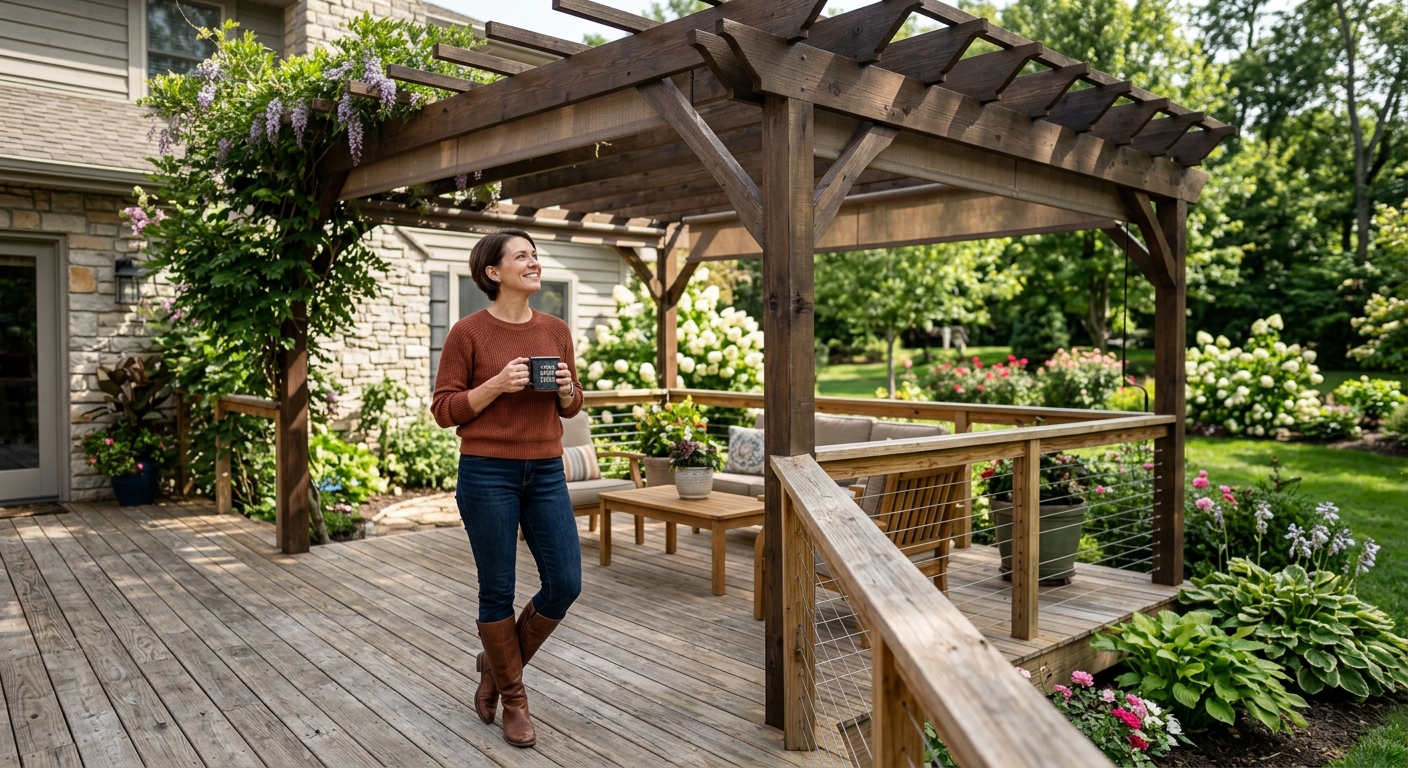
On a steep backyard, one large elevated deck platform means longer support posts, more lateral bracing, and often a single long stair run down to the yard that ends up dominating the design. Stepping the deck down in two or three tiers instead distributes the structural load more naturally across the slope, usually needs shorter, more efficient framing at each level, and gives you distinct areas — a dining tier near the house, a lounging tier lower down, maybe a final tier at pool or yard level — rather than one flat surface trying to serve every purpose at once. It also tends to look more like it belongs on the property instead of a platform bolted onto a hillside.
Footings and Framing on DeKalb County's Red Clay
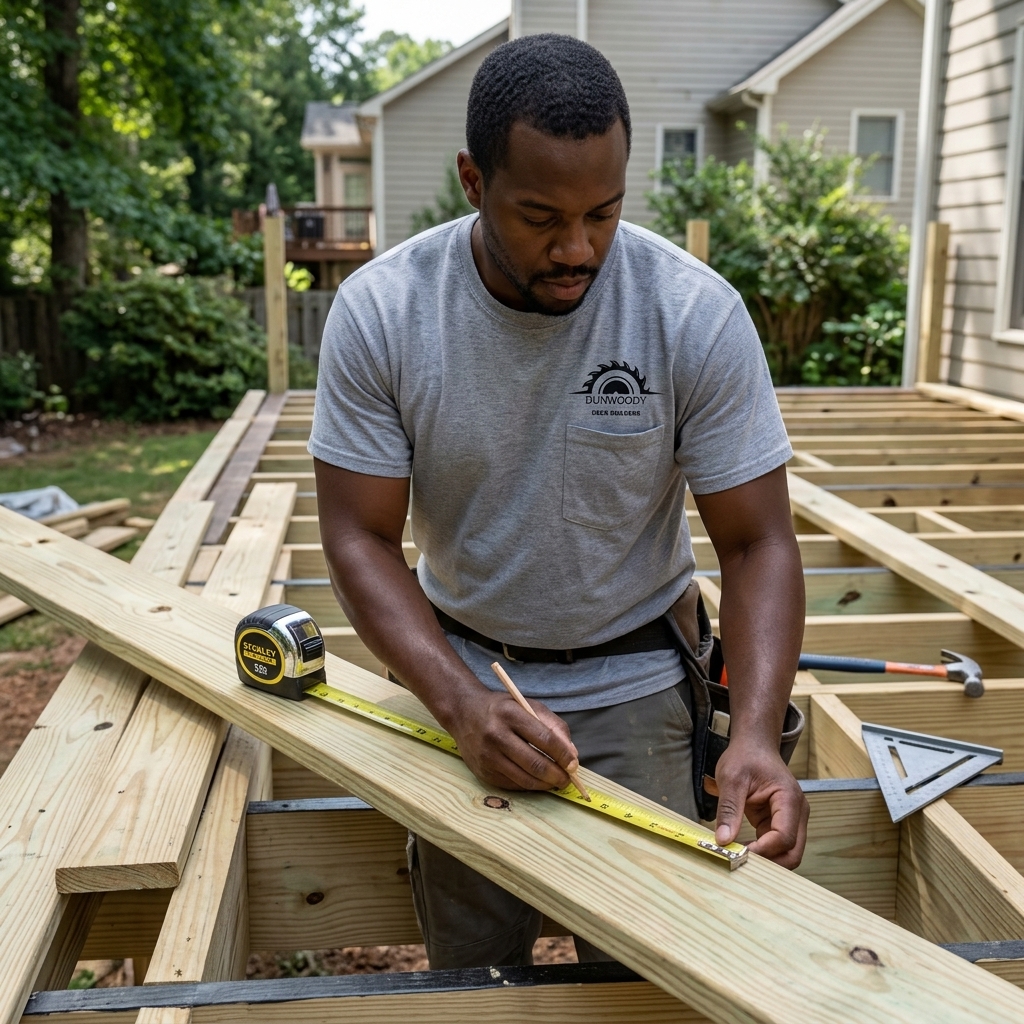
Dense red clay soil is the norm across most of DeKalb County, and it behaves differently than sandy or loamy soil when it comes to drainage and footing stability. It holds water longer after a storm, which affects how deep and how footings need to be placed, especially on a slope where water naturally moves toward the lowest point of your yard. On steeper grades we sometimes use helical piers instead of traditional poured concrete footings, since they can be installed at consistent depth without the excavation challenges a slope creates for standard footing forms. Every tier gets engineered independently for the load it's carrying rather than assuming one footing spec works for the whole structure.
Pool Deck Materials That Actually Hold Up
A pool deck deals with constant moisture, sunscreen, pool chemicals, and bare feet, which rules out a lot of standard decking choices. Capped composite decking with a slip-resistant surface texture is the most common material we recommend around Dunwoody pools, since it resists the chlorine and chemical exposure that wears down some finishes faster than expected. Color matters more here than on a typical deck too — a dark composite board sitting in direct July sun can get hot enough to be uncomfortable barefoot, so we lean toward lighter, heat-reflective tones specifically for pool surrounds, even when a homeowner's overall aesthetic elsewhere in the project runs darker.
Get a Free Multi-Level or Pool Deck Quote
Free, no-obligation on-site estimates for sloped lots and pool decks anywhere in Dunwoody and DeKalb County.
📞 Call 470-327-9145Pool Barrier Code Is Not Optional
DeKalb County enforces pool safety barrier requirements based on Georgia's adopted swimming pool code, and this is one area where we don't cut corners or offer a workaround. Barriers generally need to be at least 48 inches high, gates need to be self-closing and self-latching, and there are specific rules about gap spacing so a small child can't climb through or squeeze past a railing. We design the deck's railing and gate layout to satisfy these requirements from the initial drawings rather than treating the barrier as something to bolt on after the deck is built, since retrofitting code-compliant hardware onto a finished railing rarely looks as clean as building it in from the start.
Permits for Pool-Adjacent Structures
Multi-level decks attached to your home need a City of Dunwoody building permit with engineered drawings, the same as any structural deck project. Pool decks add another layer, since DeKalb County's review process checks the barrier design against pool code specifically, not just the structural framing. This combined review tends to take a bit longer than a standard deck permit, and we build that extra time into your project timeline from the first estimate so it isn't a surprise later. We prepare all drawings, file the applications, and coordinate every inspection through both the structural and barrier-code review.
Cost and Timeline
A two-tier deck on a moderately sloped lot generally runs $18,000 to $35,000 depending on total square footage, material, and railing style. Pool decks range more widely — a simple single-level surround starts around $15,000, while a multi-tier pool deck that wraps the pool and connects back to the house can run $40,000 or more once you factor in heat-reflective decking, code-compliant barriers, and the additional engineering a tiered pool-adjacent structure requires. Construction on a two-tier deck typically takes 2 to 3 weeks; a larger multi-level pool project can run 3 to 5 weeks, partly because equipment access around an existing pool has to be worked around carefully rather than rushed.
Comparing Tiered Decks to a Single Elevated Platform or Patio
A single large elevated platform is sometimes cheaper upfront on a mild slope, but it concentrates structural demand into fewer, larger footings and often results in one long, awkward stair run rather than a natural progression down the yard. A poured patio at grade avoids elevation issues entirely but doesn't solve the problem on a genuinely steep lot, and it can't connect cleanly to a home's main living level the way a deck does. For homes on the sloped terrain common near Perimeter Center and throughout much of Dunwoody, a tiered deck usually ends up being the option that uses the yard best without fighting the grade it was built on.
Multi-Level & Pool Decks FAQs — Dunwoody, GA
Multi-level decks are usually the answer to a sloped lot, which is common throughout Dunwoody's hillier neighborhoods. Rather than one massive elevated platform sitting far off the ground with a long stair run down, a tiered design steps down the slope in stages, which is often more structurally efficient, looks more integrated with the yard, and creates distinct zones for dining, lounging, and pool access instead of one flat surface trying to do everything.
A two-tier deck on a moderately sloped lot generally runs $18,000 to $35,000 in pressure-treated or composite material, depending on total square footage and railing choice. Pool decks vary more, from about $15,000 for a simple single-level surround to $40,000 or more for a multi-tier deck that wraps a pool and connects to the house, since pool decks require heat-reflective decking, non-slip surfaces, and code-compliant barriers. Every estimate is itemized and free.
Capped composite decking with a slip-resistant, heat-reflective surface finish is the most common choice for Dunwoody pool decks, since it handles constant moisture and pool chemicals better than untreated wood and stays cooler underfoot in direct summer sun than standard composite or wood. Lighter color tones specifically help here, since a dark composite board around a pool in July can get uncomfortably hot to walk on barefoot.
Yes. DeKalb County enforces pool barrier requirements based on Georgia's adopted swimming pool code, generally requiring a barrier at least 48 inches high with self-closing, self-latching gates, and specific spacing rules for any openings a small child could climb through or squeeze past. We design railings and gates around your pool deck to meet these requirements from the start rather than adding a barrier as an afterthought.
We start with footings sized and placed for your specific slope and soil conditions, since DeKalb County's dense red clay drains slowly and holds water differently depending on grade. On steeper lots, footings often need to go deeper or use helical piers where a traditional poured footing isn't practical. From there, the deck steps down in tiers connected by stairs, which distributes structural load more evenly than one large elevated platform would on the same slope.
Yes. Multi-level decks attached to your house need a City of Dunwoody building permit and engineered drawings, and pool decks additionally need to satisfy DeKalb County's pool barrier code as part of that review. This is one of the more heavily scrutinized permit categories because of the safety requirements around pools, and we handle the full drawing, filing, and inspection process so nothing gets missed.
A two-tier deck typically takes 2 to 3 weeks to build once permits clear. A larger multi-level pool deck wrapping an existing pool can take 3 to 5 weeks depending on complexity and how much of the pool equipment area needs to be worked around. Permit review for pool-adjacent structures in DeKalb County can take longer than a standard deck permit given the added barrier-code review, so we build extra time into the schedule from the start.
In most cases, yes. We work around the existing water and equipment pad, positioning footings and framing outside the pool structure itself. The main consideration is access for equipment and material staging, which we plan out during the site visit so the pool stays usable for as much of the project as possible.
Stair runs between tiers are framed to the same structural standards as the deck itself, with stringers sized for the specific rise and run of your slope rather than a generic template. On pool decks, stair treads use the same slip-resistant surface as the rest of the deck, since wet feet on a standard smooth board is one of the more common injury risks around a pool.
Pool decks deal with constant splash-out, sunscreen residue, and chlorine exposure, which can build up on composite surfaces over time if not rinsed regularly. We recommend a more frequent rinse-down than a standard deck, plus a periodic check of gate hardware and latches on the pool barrier, since these see heavier daily use and are safety-critical rather than just cosmetic.
Not typically — in the Dunwoody market, a well-designed multi-level deck that makes a sloped lot feel usable is generally seen as a selling point rather than a complication, since it solves a problem buyers would otherwise have to figure out themselves. A pool deck specifically tends to be a strong feature in this area given how much outdoor entertaining space matters to buyers here.
Yes — steep grade changes are exactly what multi-level design solves, and Dunwoody has plenty of sloped lots that make a single flat deck impractical. We'll walk the site, note where the grade breaks, and design landings and stair runs that follow the terrain rather than fighting it, which usually keeps footing and framing costs more reasonable than trying to force one continuous elevated platform.