
A deck built out of real lumber is still what most Dunwoody homeowners picture first when they think about adding outdoor living space. It takes stain in almost any tone you want, it can be shaped around an awkward lot line or a mature oak you're not willing to lose, and a properly framed wood deck adds usable square footage that earns its keep three seasons out of four. We frame and build pressure-treated pine and cedar decks throughout Dunwoody and the rest of DeKalb County, sized around how your household actually spends time outside rather than a stock blueprint pulled off a shelf.
That might mean a modest platform stepping off a kitchen door in a ranch home near Dunwoody Village, or a deck that steps down a graded backyard in one of the wooded subdivisions off Mount Vernon Rd. Either way, the process starts with us walking your yard and talking through how the space will actually get used before a single board is ordered.
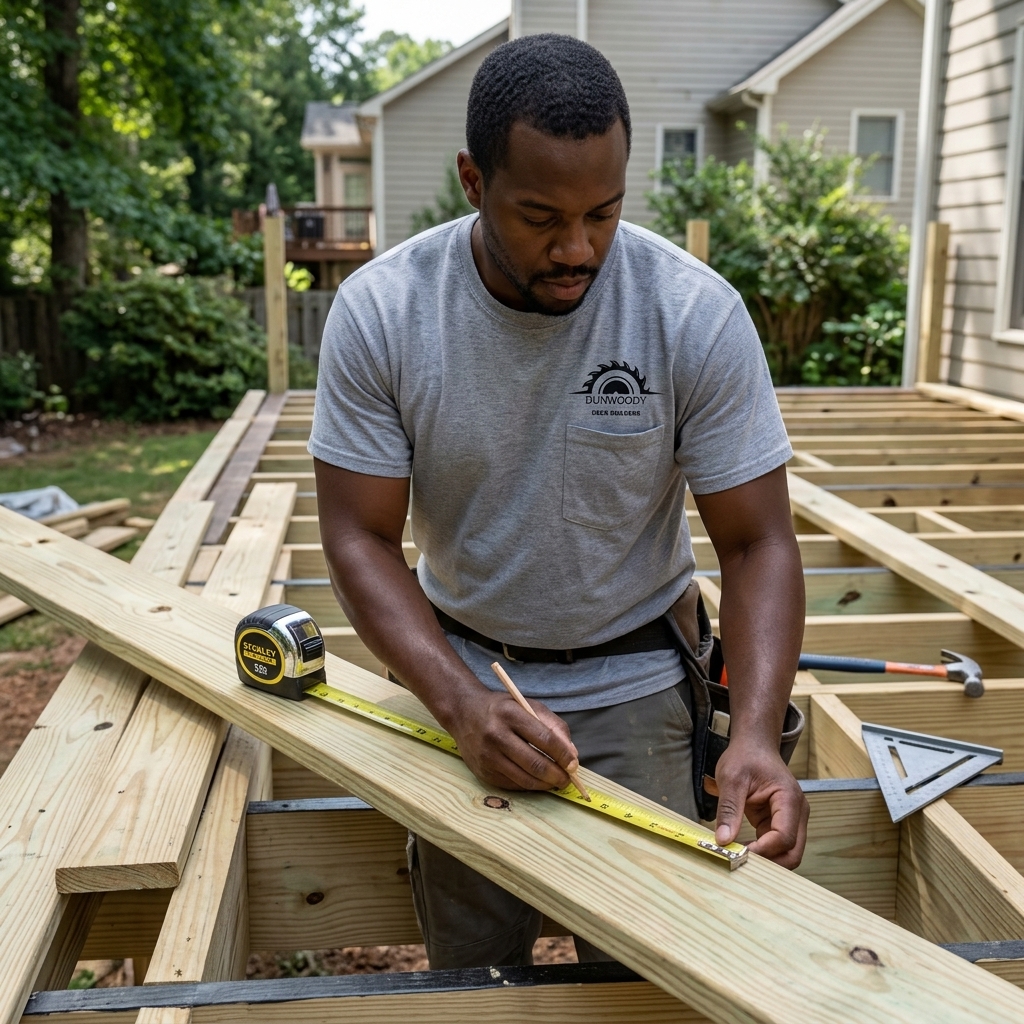
Pressure-Treated Pine vs. Cedar: Picking the Right Lumber
Pressure-treated southern yellow pine is the default choice for most of our Dunwoody clients, and it earns that spot honestly. It's readily available, it's the most affordable option per board foot, and when it's properly sealed it holds up for well over a decade in this climate. We use lumber rated for ground contact on every structural member, since that rating matters more here than in drier parts of the country where a lot of national decking guides get written.
Cedar runs higher, usually 20 to 35 percent more than pressure-treated pine for the same footprint, but it brings genuine advantages: naturally better rot and insect resistance, a tighter and more attractive grain, and a warmer look that a lot of homeowners want on visible surfaces like stair treads and top rails. On several recent builds near Ashford-Dunwoody Rd we've mixed the two — pressure-treated framing underneath, cedar on the parts you actually see and touch — which keeps the budget reasonable without giving up the look homeowners are after.
Building for DeKalb County's Red Clay and Georgia Humidity
DeKalb County's dense red clay soil is workable but unforgiving if you cut corners on footings. Clay expands when it's saturated after a summer thunderstorm and contracts hard during a dry spell, and a footing that isn't poured to the right depth and diameter for your specific soil profile will eventually heave or shift. We dig and pour every footing below frost depth and sized to the load it's actually carrying, not a generic number pulled from a different region's spec sheet.
Humidity is the other constant here. Georgia summers put a lot of moisture into wood day after day, and Dunwoody's tree canopy means shaded decks stay damp longer after a rain than an open lot would. We leave generous board spacing for airflow, flash every ledger connection where the deck meets the house to keep water out of the wall framing, and orient joists to shed water rather than pool it. Spring pollen is a real factor too — it coats every horizontal surface in a fine yellow film for a few weeks each April, which is more of a cleaning nuisance than a structural one, but it's worth knowing before you pick a light-colored stain.
Get a Free Custom Wood Deck Quote
Free, no-obligation on-site estimates anywhere in Dunwoody and DeKalb County.
📞 Call 470-327-9145Permits: What the City of Dunwoody and DeKalb County Require
Any deck attached to your house, or elevated more than a step or two above grade, needs a building permit — from the City of Dunwoody if your property sits inside city limits, or from DeKalb County's building department if it doesn't. Most projects also need engineered drawings sized to Georgia's residential building code, covering footing depth, joist spans, and guardrail height. We prepare those drawings ourselves, submit the application, and schedule every required inspection, so you're never the one making a trip to a permit counter.
Inspectors in this part of DeKalb County pay particular attention to ledger attachment and footing depth, given how much wood rot they see on older, unpermitted decks that were never flashed correctly in the first place. Skipping the permit process might save a couple weeks up front, but it becomes a real problem at resale when a buyer's inspector flags an unpermitted structure — we've seen that hold up closings for homes near Perimeter Center more than once.
What a Custom Wood Deck Costs and How Long a Build Takes
Most pressure-treated wood decks we build in Dunwoody land between roughly $7,000 and $17,500, with the final number driven by square footage, height off grade, railing style, and add-ons like a stair tower or built-in bench seating. Cedar decks typically run 20 to 35 percent higher for the same layout. Homes in the neighborhoods around Chamblee-Dunwoody Rd and closer to Perimeter Center sometimes call for taller elevated decks to handle a steeper grade, which pushes cost up through additional footings and railing.
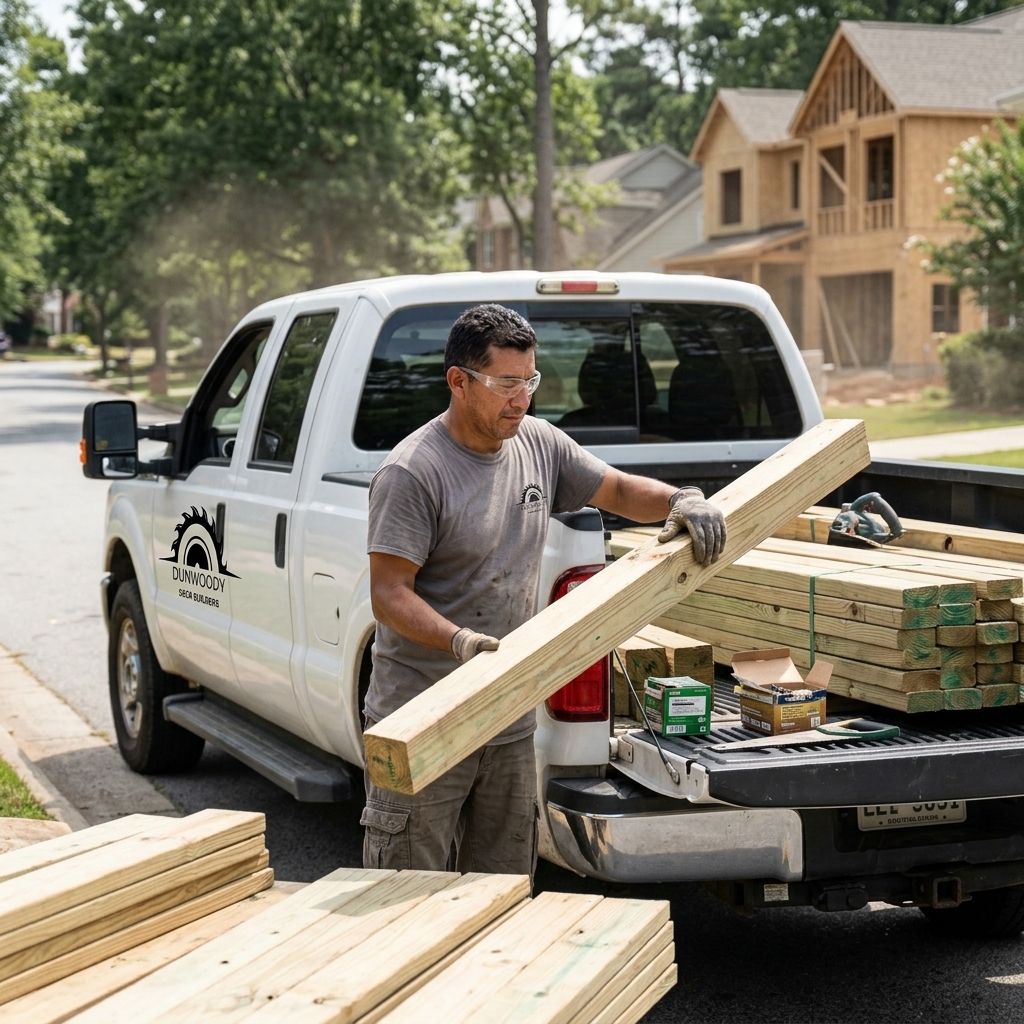
Once your permit is approved, a single-level deck typically takes 1 to 2 weeks to build start to finish. Multi-level layouts, wraparound designs, or decks with a full stair tower run longer. Being close to I-285 and GA-400 actually helps us here — lumber yards and hardware suppliers around the Perimeter can usually get us a same-day or next-day delivery if we need to restock mid-build, which keeps projects moving instead of sitting idle waiting on materials.
Maintenance, Longevity, and How Wood Stacks Up Against Composite
Plan on cleaning and resealing a wood deck every 12 to 18 months in this climate. Between the humidity, the spring pollen, and strong summer UV, a finish here breaks down faster than it would in a milder or drier region. Stay on that schedule and a well-built pressure-treated deck will typically last 15 to 20 years; cedar performs similarly with the same regular sealing. The framing and construction quality end up mattering more to lifespan than which species you started with.
Compared to composite decking, wood almost always wins on upfront price — the material itself costs less per square foot. The tradeoff is exactly that ongoing maintenance: composite skips the sealing cycle entirely once it's installed. If low maintenance matters more to you than initial cost, it's worth a look at our composite and Trex decking page before you decide, since we build both and can price your project either way with no pressure toward one or the other.
Custom Wood Decks FAQs — Dunwoody, GA
Most pressure-treated wood decks in the Dunwoody area run between roughly $7,000 and $17,500 depending on square footage, height off grade, railing style, and extras like built-in seating or a stair tower. Cedar decks typically add 20 to 35 percent on top of that. Every number we hand you is itemized in writing, and the walkthrough to get there is free.
A wood deck that's framed correctly and sealed on schedule typically lasts 15 to 20 years in this part of DeKalb County. Cedar and pressure-treated pine both get there when the framing is solid and the finish gets renewed regularly — the construction quality matters more than which species you pick.
Almost certainly. Any deck attached to your house, or one raised more than about a step above grade, needs a permit from either the City of Dunwoody or DeKalb County, and most need engineered drawings stamped to Georgia's residential code. We produce the drawings, file the permit, and schedule every inspection ourselves.
Plan on a cleaning and resealing cycle every 12 to 18 months. Metro Atlanta's humid summers, spring pollen, and strong UV all break a finish down faster than a drier climate would. We hand every client a simple maintenance calendar, and we also do refinishing work if you'd rather have us handle it start to finish.
Yes, we regularly tie new wood decks into existing pools and patios throughout Dunwoody and neighboring Brookhaven and Chamblee. We design the framing and stair placement around your pool equipment, existing hardscape, and how your family actually moves through the yard.
Structural framing is pressure-treated southern yellow pine rated for ground contact, with joist hangers and fasteners coated to resist corrosion in Georgia's humidity. Decking and railings can be pressure-treated pine or cedar depending on your budget and the look you want.
Most single-level wood decks in the Dunwoody area take 1 to 2 weeks to build once the permit clears and materials are on site. Multi-level decks or ones with a stair tower take longer. You'll get a specific start-to-finish window before we ever pick up a tool.
Generally, yes. Usable outdoor square footage is a strong selling point in a market where buyers near the Perimeter weigh outdoor living heavily, and a well-built deck is one of the more reliably good-returning exterior projects a homeowner can make.
That's the goal on every project — matching board direction, railing profile, and stain tone to your home so the deck reads as part of the original design rather than an obvious add-on, whether that's a brick ranch near Dunwoody Village or a newer build off Mount Vernon Rd.
Yes, and they're a popular budget-friendly option on flatter Dunwoody lots. Ground-level decks are usually simpler to permit and still deliver real usable outdoor space without the added cost of an elevated frame and taller railing.
Upfront, almost always. Pressure-treated wood has a lower material cost; the tradeoff is ongoing maintenance, since wood needs periodic sealing and composite mostly doesn't. We'll walk you through both numbers side by side so the decision is based on real figures, not guesswork.
Yes, every estimate is free with zero obligation anywhere in Dunwoody and the rest of DeKalb County. We measure your yard in person and leave you with a written, itemized number the same visit whenever possible.