
Most decks in Dunwoody don't fail all at once. They start with one soft board near the stairs, a rail that's gotten a little loose, or a finish that's gone gray after a couple of summers without sealant. By the time a homeowner calls us, the question is almost always the same: is this worth fixing, or has it gone too far? We give a straight answer either way, based on what we actually find when we get under the deck and look at the frame, not just what the surface looks like from the yard.
What We Actually Check Before Quoting a Repair
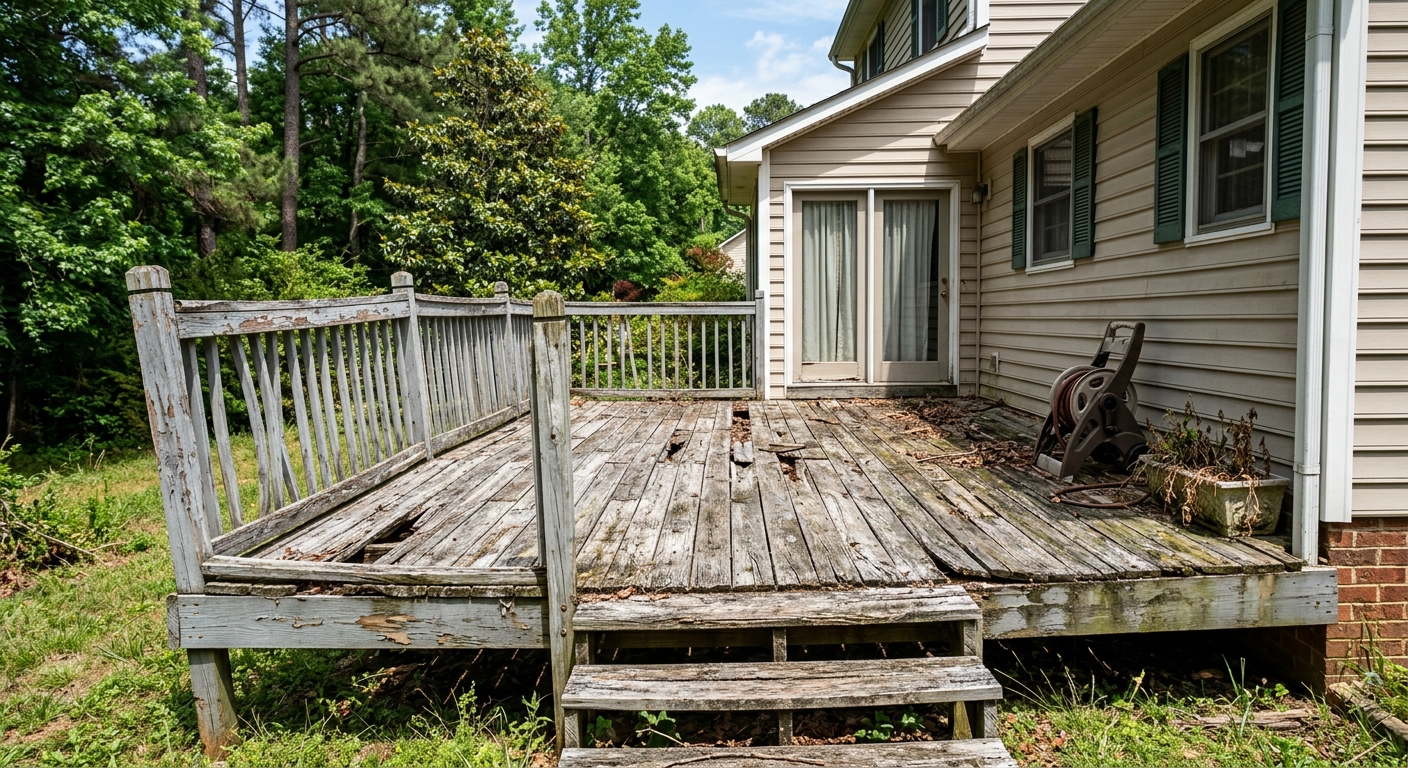
A repair estimate starts underneath the deck, not on top of it. We check the ledger board where it attaches to the house, since that connection is the single most common point of failure on older decks in Dunwoody's established neighborhoods — many were built before current flashing standards, and years of humidity working on an unflashed ledger eventually leads to rot at the exact spot holding the whole structure to your house. From there we check footings for movement or cracking, joists for soft spots or sagging, and posts for rot at ground contact. Only after the frame checks out do we look at surface boards, railings, and stairs, since that's where a lot of quick, affordable fixes live if the bones underneath are solid.
Why Decks Age Faster in Metro Atlanta's Climate
Georgia's climate is genuinely tough on outdoor wood structures, and it isn't just the heat. Humid summers keep moisture in contact with wood fibers longer than a drier climate would, DeKalb County's dense red clay soil holds water around footings after a storm instead of draining quickly, and pollen season each spring coats deck surfaces in a layer of organic material that traps moisture against the boards if it isn't washed off. Add in a strong summer thunderstorm rolling through the Perimeter area every week or two from May through August, plus the occasional ice storm in winter that stresses fasteners and connections, and it adds up to conditions that wear down an unmaintained deck faster than most homeowners expect.
That's why we see so many repair calls for issues that are entirely preventable with a maintenance routine — but by the time we're called, the goal shifts from prevention to an honest assessment of what's salvageable.
Structural Repairs vs. Cosmetic Fixes
Structural repairs address anything load-bearing: footings, ledger reattachment, joist sistering, or post replacement. These aren't optional and they aren't cosmetic — a compromised footing or a rotted ledger connection is a safety issue, not an appearance issue, and we won't leave one half-fixed. Cosmetic and surface repairs cover board replacement, rail rebuilding, stair tread swaps, and refinishing. Both categories often show up on the same deck, and it's common for us to do a small structural repair alongside a larger cosmetic resurfacing in one visit, since it doesn't make sense to put new boards on top of a frame that still needs attention.
Get a Free Deck Repair Estimate
Straight answers on repair vs. replacement, with a free on-site estimate anywhere in Dunwoody and DeKalb County.
📞 Call 470-327-9145Permits for Repair Work
Simple board, rail, and stair-tread replacement generally doesn't require a permit from the City of Dunwoody. Anything touching the ledger board, footings, or main structural framing typically does, and this catches a lot of homeowners off guard when what feels like a small repair turns into a permitted structural fix. It's also common for us to discover that an older deck was never permitted when it was originally built, which can complicate a repair or resurfacing project since the city may want to bring the whole structure up to current code rather than sign off on a partial fix. We check the permit status and scope before quoting so there are no surprises mid-project.
Cost Ranges and Realistic Timelines
Small repairs — a handful of boards, a rail section, a stair fix — typically run $400 to $2,000 and are usually done in a single day. Structural repairs involving footings, ledger reattachment, or sistered joists generally run $2,500 to $7,000 and take 2 to 4 days. A full resurfacing that keeps the existing frame but replaces every decking board usually falls between $6,000 and $14,000 depending on size and material, and takes 3 to 6 days. We'll always give you an itemized breakdown so you can see exactly what's structural, what's cosmetic, and why each piece costs what it does.
Restoration Without a Full Rebuild
For wood decks where the frame and boards are still sound but the finish has faded or mildewed, restoration is often the right call instead of replacement. We pressure wash to remove the buildup that's common on shaded lots near Brook Run Park and other tree-covered parts of Dunwoody, sand where the old finish has failed unevenly, and apply a fresh stain or sealant matched to your preferred color. Composite decking that's faded can be deep cleaned but generally can't be restained, since the color is built into the material rather than applied on top of it — for those decks, restoration is really a thorough cleaning and hardware check rather than a refinish.
When Replacement Actually Makes More Sense
If we find rot at the ledger connection, multiple failed footings, or joists that have deteriorated across a large section of the frame, patching those issues piecemeal usually costs more over a couple of years than a full rebuild would have cost upfront — and it never fully resolves the underlying problem. We'd rather tell you that plainly during the first estimate near Chamblee-Dunwoody Road or anywhere else in our service area than sell you a repair we know won't hold. When replacement is the right call, we'll walk you through what a new deck would look like and how it compares in cost to continuing to patch the existing one.
Deck Repair & Restoration FAQs — Dunwoody, GA
We start every call with a hands-on inspection, checking the ledger board connection, footings, main support posts, and joists before we ever look at the surface boards. If the structural frame is sound and the damage is limited to boards, rails, or finish, repair almost always makes sense. If footings have shifted, the ledger has rotted where it meets the house, or multiple joists have failed, replacement is usually the more honest answer, and we'll tell you that directly rather than patching something that isn't safe.
Small repairs like replacing a handful of boards, tightening or rebuilding a rail section, or fixing a wobbly stair run usually cost $400 to $2,000. Larger structural repairs involving footings, ledger reattachment, or joist sistering typically run $2,500 to $7,000. Full resurfacing, where we keep the existing frame but replace all the decking boards, generally falls between $6,000 and $14,000 depending on size and material. Every estimate is itemized and free.
Yes, soft or spongy boards usually mean moisture has gotten into the wood and rot has started, and it's worth having it looked at soon rather than waiting. Georgia's humidity and the amount of standing moisture that DeKalb County's red clay soil holds near footings both accelerate this kind of decay. A soft board is a symptom; we always check whether the joist underneath it has also started to fail before we recommend just swapping the board.
Straightforward board and rail replacement generally doesn't require a City of Dunwoody permit. Work that touches structural framing — footings, the ledger board, or main support posts — usually does, especially if the original deck was never permitted in the first place. We check the scope of work against the city's requirements before we start and pull permits whenever the repair crosses into structural territory.
For pressure-treated or cedar decks, yes, we can usually get a close match, though new lumber will look lighter until it weathers in over a season or two. For composite decking, matching is harder if your deck is more than a few years old since manufacturers update color runs regularly; we'll bring physical samples to your house so you can see how close a match is realistically possible before committing.
Board and rail repairs are usually done in a single day. Structural repairs involving footings or ledger work typically take 2 to 4 days. A full resurfacing where we strip the old decking and install new boards on the existing frame generally takes 3 to 6 days depending on size. We'll give you a specific window at the time of your estimate, not a rough guess.
It depends on how much of the structure is still sound. If the frame, footings, and ledger are healthy, repairing or resurfacing is almost always cheaper than a full rebuild. If the frame itself has failed in multiple places, patching repairs individually can end up costing more over a couple of years than a full replacement would have cost upfront. We'll walk you through both numbers side by side so the decision is based on real costs, not guesswork.
Loose rails are usually a hardware problem, a rot problem, or both. Original construction with undersized or non-corrosion-resistant fasteners tends to loosen over time, especially with Georgia's humidity working on the connection year-round. If the post itself has softened where it meets the frame, that's a rot issue that needs the post replaced, not just the fasteners tightened, since a wobbly rail is a fall hazard we take seriously.
Often, yes. If the wood underneath is still structurally sound, we can pressure wash, sand where needed, and apply a fresh stain or sealant that restores much of the original color and protects the boards going forward. This works well for wood decks with sun fading or mildew staining. Composite decking that's faded generally can't be restained, since the color runs through the material itself, so restoration there is more about deep cleaning.
We recommend a professional inspection every 2 to 3 years for a deck over 10 years old, and annually for anything approaching 20 years, particularly for decks that see pool traffic or heavy use. Georgia's freeze-thaw winters, though mild, combined with humid summers create a cycle that wears on fasteners and framing faster than a drier climate would, so catching issues early keeps repair costs manageable.
Yes, all structural repair work is backed by our workmanship warranty, and we'll go over the specific coverage terms as part of your written estimate. Materials carry their own manufacturer warranties, which we'll also walk you through, particularly for composite decking replacement boards.
Yes, and it's more common than most homeowners expect, especially on older Dunwoody homes. We'll assess the structure on its own merits regardless of its permit history, and if the repair scope crosses into structural work, we'll pull the permit at that point so the deck is documented correctly going forward. That protects you at resale even if the original build wasn't properly permitted.