
Almost every consultation we run in Dunwoody eventually lands on the same fork in the road: pressure-treated wood or composite decking. Both are good choices — this isn't a case where one material is objectively better and the other is a mistake. It's a question of what you're optimizing for. Some homeowners want the lowest possible check written this year; others are thinking about the deck they'll still have in year twelve with no sanding weekend on the calendar. Here's how the two actually compare once you get past the showroom sample board.
Upfront Cost: Wood Wins the First Invoice
There's no getting around it — pressure-treated lumber is cheaper to buy and install than composite. In the Dunwoody area, wood decking material generally runs $5 to $9 per square foot versus $8 to $16 for composite, a gap that shows up clearly across every size band we cover in our full cost breakdown. For a homeowner on a tight budget, or someone planning to sell within a few years and just wants the deck functional and presentable, wood is often the more sensible starting point.
Lifetime Cost: The Math Starts to Flip
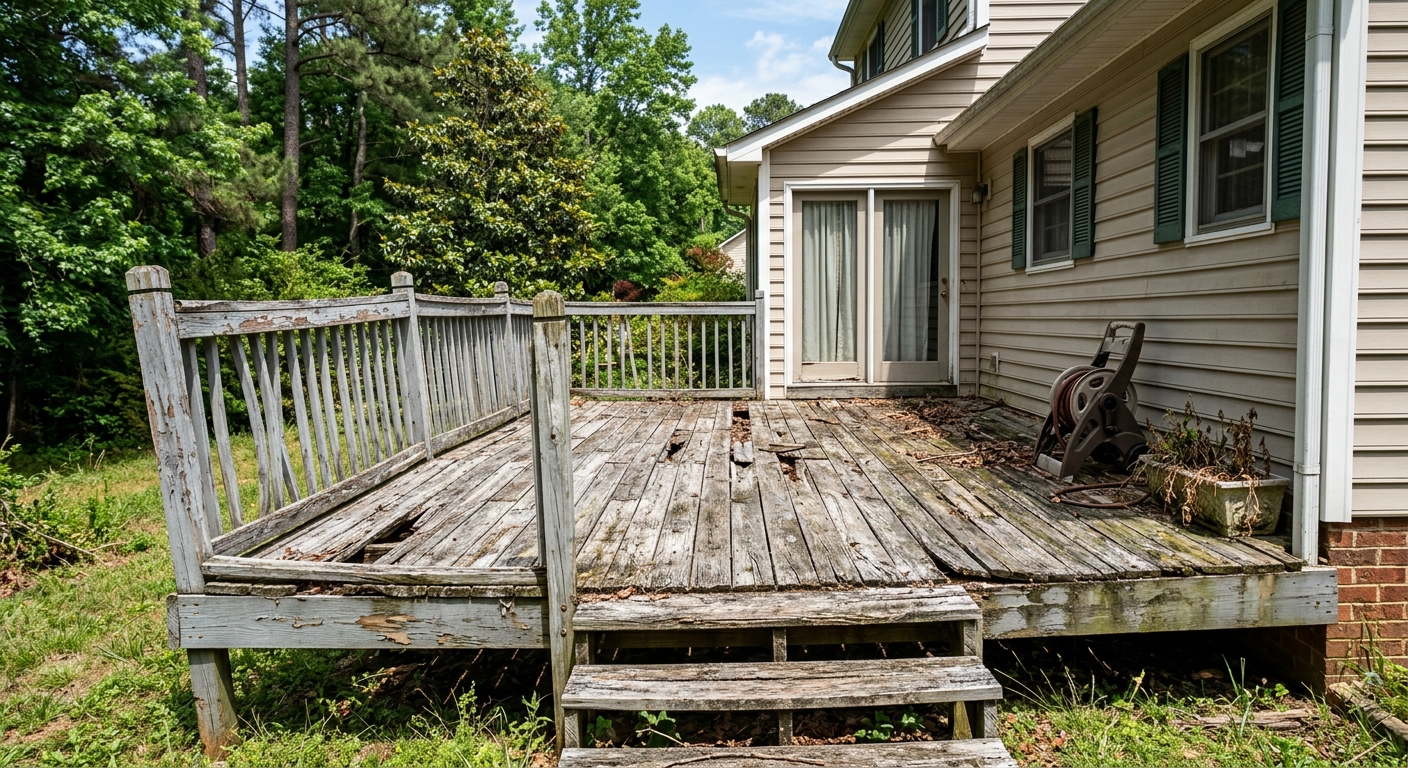
Wood's cost advantage shrinks the longer you own the deck. A pressure-treated deck in metro Atlanta's climate typically needs restaining or resealing every two to three years to fight off UV fading and the swelling and shrinking that comes with our humid summers and occasional hard freeze. Budget roughly $400 to $900 per cleaning-and-staining cycle depending on deck size, plus board replacement as fasteners work loose and individual boards cup or split — usually starting somewhere in years six through ten. Add that up over 15 years and a wood deck's true cost often lands closer to composite's upfront number than the sticker price suggested on day one. Composite, by contrast, generally needs nothing more than an occasional wash — we cover the specific seasonal routine in our composite maintenance guide.
Maintenance Burden in a Georgia Climate
This is where the two materials diverge the most in daily reality. Dunwoody's combination of heavy spring pollen, humid summers, and afternoon thunderstorms is hard on any exposed wood surface — mildew and algae take hold quickly on boards that don't dry out fast, and a missed staining cycle can mean a deck that looks tired well before it's structurally due for replacement. Composite decking sheds pollen and grime with a garden hose and occasional soap-and-water scrub, and it doesn't splinter, warp, or need re-sealing. If low weekend maintenance matters more to you than the purchase price, this is usually the deciding factor.
Not Sure Which Fits Your Yard?
We'll walk you through samples of both, talk through your budget and how long you plan to stay in the house, and give you a straight recommendation.
📞 Call 470-327-9145Appearance and Warranty
Fresh cedar or high-grade pressure-treated wood has a warmth that some composite boards still can't fully replicate, especially up close. But modern capped composite has closed most of that gap with deep wood-grain embossing and color blending that looks convincing from normal viewing distance, and it doesn't silver or gray the way untreated wood does within a season. Warranty coverage is another real difference: most composite manufacturers back their boards for 25 to 50 years against fading, staining, and structural defects, while wood carries no material warranty beyond what you maintain yourself. We break down how the different composite brands and tiers stack up in our decking brand comparison if you're leaning that direction.
Which One Actually Wins
If you're working with a firm, tight budget, plan to move in the next few years, or simply enjoy weekend deck upkeep, pressure-treated or cedar decking is a perfectly good call and remains the most common choice we build in Dunwoody. If you want to spend more once and effectively forget about the deck for the next two decades, want the most consistent look board to board, or you're building somewhere hard to reach for regular re-staining — like an elevated deck off a walkout basement — composite tends to be the better long-term value. Either way, the framing and footing work underneath is identical, so it's genuinely a decision you can revisit conceptually without changing anything about how the deck gets engineered or permitted, which we walk through in our permit guide.
A Note on Resale in Dunwoody
Dunwoody's housing stock skews toward move-up buyers who tend to be comparing several similar homes at once, and a well-built deck in either material photographs well and shows well in person. Where the two diverge is in what a home inspector notes during a sale: a wood deck with visible board cupping, gray weathering, or soft spots near the ledger tends to generate a line item on the inspection report, even if it's purely cosmetic, simply because it's easy to see and easy to flag. Composite rarely triggers that same scrutiny since it doesn't visibly age the same way. Neither issue is a dealbreaker, but if you're building with resale in the next handful of years in mind, it's worth factoring into the decision alongside your day-to-day maintenance appetite.
Bring us a photo of your backyard and a rough budget, and we'll bring samples of both materials to the first walkthrough so you're comparing them in your own light and against your own siding, not under fluorescent showroom bulbs.